
Had a gift slept till noon swapped the whoop
Pan is full of rocks and sand and water what
Else could there be sinking softly cringe quietly
Moody wood tender stump chopped down tree
Calmly I strike you singing out of tune aiming
Had a gift slept till noon swapped the whoop
Pan is full of rocks and sand and water what
Else could there be sinking softly cringe quietly
Moody wood tender stump chopped down tree
Calmly I strike you singing out of tune aiming
Saw the storm, jumped over the waves
The moon is rising, the wolf is crying
I am screaming, second base is thrilling
Sour patch crunch the stillness milling about
Lanes cross the road cars pump gas openly
Cat sad eaten slip laugh pet roll apple enough
Caught ample rally and over table cackle ouch
Penelope knife seek swat flee people ancient
Stars change weed stalk sweep tense staple
Really walking needlessly stopping stupidly
Here is an excerpt from Disjunctive Poetics, by Peter Quartermain:
“…Williams and Zukofsky both write paratactic verse — in their syntax there is no subordination, there is rather a stringing out of beads on a string, as Aristotle complained, where everything is of equal importance…
“…the poem is an object…in her 1909 essay on Picasso, Gertrude Stein distinguished between things, things seen, and things known, a distinction that reminds us of the ineluctable and intransigent quality of things: unknown, probably unknowable. The poem as a thing is resistant, and must baffle us, leave us shall we say at a loss?”
Stick fire poke lick ripe trade down laid
Apple cart swing my feet with a start
Range below triage quite impossible
Let out the chimpanzees to the oven
Close the door bellow broom might weld
Cookie capture evil wipe swarm eek weep
Smoke
Slowly
Fills the room,
Then the house.
The fire is not
Extraordinarily high,
And the chimney flue
Is open.
So, why, the smoke?
After a few hours,
The smoke alarm
In the hallway
Comes on.
I turn on the exhaust fan,
Above the stove.
I open the front door,
With the window up
On the screen door.
I open the door to the garage.
I turn on the ceiling fan,
Sucking air up.
Finally,
The blasted smoke alarm
Turns off.
Now,
We’re not toasty
Anymore.
Time to put more wood
On the fire.
A fire burns
In the fireplace.
It is hot.
It does not burn
My dog,
Who lays near it.
It does not catch my house
On fire, no, it is safe.
However,
On second thought,
We haven’t had the chimney
Inspected in several years.
Maybe,
It’s time,
Perhaps,
Past time!
The fire warms the room,
Indeed,
It even warms the house,
Takes the chill
Out of the air,
As my wife says.
The fire was easy enough
To get started,
With those chemically-treated
Fire logs to get it going.
Just light the corners
Of the paper package,
And it blazes away.
Simple enough.
Not sure if those are bad
For chimneys or not.
We get firewood
Delivered
To our house.
They back their truck in,
And carry the wood
Into the back yard,
And stack it up
Next to the fence.
Makes it nice
When you need some wood.
And it’s not just an alienation from language, or communication. It’s rejection of the individual, lack of acceptance, judgment. Words are empty when trying to express the grief and sorrow that results from this situation, a hopeless condition.
Lack of connection. No community. No friends. No religion. No god. Just a meaningless existence with no purpose, no focus, no hope. Everything social is either scripted or random. There is nothing real out there, or in here.
And there is only the chance to connect based on a common existence or perceived state of loneliness, ennui, loss of meaning, relativity. Everything depends on everything else. Nothing is certain. Life is one absurd action, thought or event after another.
Start end poised jump dive comprehend
Lift stomp squish squeeze push
Scream elevate rhythm quality trippin’
Below above round and round
To the beginning again, slow motion.
Is there peace? A silly question, on your knees.
Another update with current reflections on unpoetry from 2022. This results from research into “Disjunctive Poetics: From Gertrude Stein and Louis Zukofsky to Susan Howe” by Peter Quartermain, and several works on the objectivist poets.
This meditation concerns itself with “language as object.” Alienation from the English language, or, in my opinion, any language at all, creates a certain relationship between the poet and the words in his or her poetry. Syntax can become difficult, and meaning, impossible.
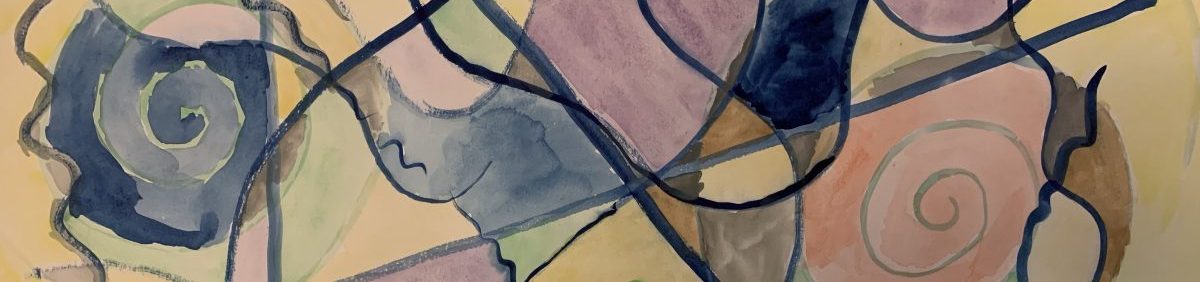
Words are used like pigments in an abstract expressionist or cubist painting, in which a bunch of objects are juxtaposed together in a seemingly random (though sometimes, but sometimes not, with carefully chosen placement) and detached manner. Whether it is a flick of the brush, a dumping of a can of paint, or just a very barbaric collection of images that shocks or confuses.
This is unpoetry, folks! It’s the same thing, just done with language. Word as object, in a collage, or maybe a series of nonsensical statements. Absurdity abounds. An alienation from reality that results in an alienation from society, and an alienation in a failed attempt, over and over again, to communicate.
gsb3
 Stumbling along the sidewalk