
1. Process:
I consider this type of writing as the opposite of poetry, if not in meaning, then at least in process. Words are chosen and linked together, not to create meaning, but to defy it. This is not to say that there is no meaning to be found there, only that the meaning is not there on purpose, the idea being that meaning comes through not by the conscious purpose of the author, but by the subconscious of the author, with each next word being arrived at through a very selective stream-of-consciousness in which the writing is created as sort of an absurd collage of seemingly unrelated words. If it was a collage of visual, physical material, the pieces would be chosen for their shape, size or color, not their content.
2. Word choice:
As stated above, words are chosen for how they look, sound, or, perhaps, feel, but if there is too close of a connection in meaning or association with other words in the same line, it would thus threaten to arrive at conscious meaning, and so are avoided. Rhyming and alliteration are acceptable, and, in fact, valued, as meaning is not affected by these mechanisms and can contribute to the pleasure of the reading without interfering with the primary goal of avoiding conscious meaning. In fact, it is noted that in concentrating on rhyme, alliteration and rhythm, the writer finds it easier to stay away from conscious meaning and can be a better vehicle for the subconscious.
3. Bizarre images
Often I like to use bizarre images or make bizarre juxtapositions of words in order to push the poem more into absurdity, as well as make the reader’s experience more amusing. It is not the goal of the poet to offend, although shock value sometimes has its merit. Instead, attempting to use strange words is my way of trying to go against the grain of “typical poetry” if there is in fact such a thing. Powerful images and colorful words are fun to write, and, the author hopes, fun to read! 🙂
4. Syntax
This type of writing has no obvious syntax. Each word serves to stand on its own and any connections in meaning which may appear to be present are unintentional, although may still be used as a basis for making conclusions about subjective meaning. There is no objective meaning outside of the meaning of each individual word that is chosen to be a part of that particular work.
I hope the above hints serve as clues to why I write what I write, and thus can help the reader to appreciate this difficult type of creative writing. If you have any questions about the above explanations or anything else related to “Unpoetry”, or if you’d just like to make a comment about it, this is a good place to do it.
…
Another update with current reflections on unpoetry from 2022. This results from research into “Disjunctive Poetics: From Gertrude Stein and Louis Zukofsky to Susan Howe” by Peter Quartermain, and several works on the objectivist poets.
This meditation concerns itself with “language as object.” Alienation from the English language, or, in my opinion, any language at all, creates a certain relationship between the poet and the words in his or her poetry. Syntax can become difficult, and meaning, impossible.
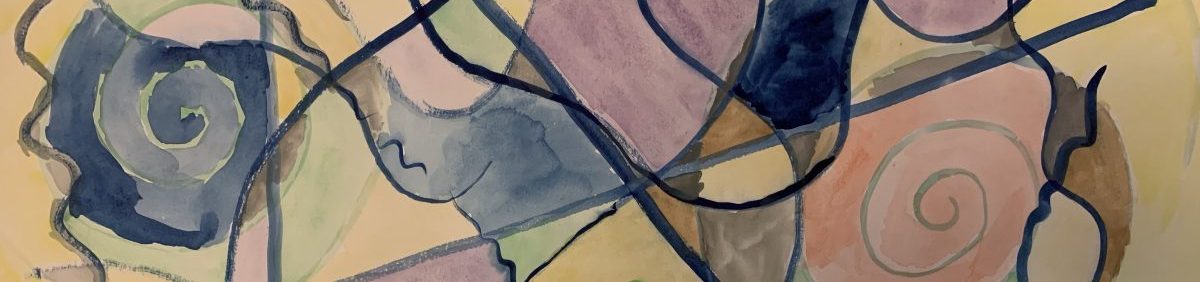
Words are used like pigments in an abstract expressionist or cubist painting, in which a bunch of objects are juxtaposed together in a seemingly random (though sometimes, but sometimes not, with carefully chosen placement) and detached manner. Whether it is a flick of the brush, a dumping of a can of paint, or just a barbaric collection of images that shocks or confuses.
This is unpoetry. It’s the same thing, just done with language. Word as object, in a collage, or maybe a series of nonsensical statements. Absurdity abounds. An alienation from reality that results in an alienation from society, and an alienation in a failed attempt, over and over again, to communicate.
…
Here is an excerpt from Disjunctive Poetics, by Peter Quartermain:
“…Williams and Zukofsky both write paratactic verse — in their syntax there is no subordination, there is rather a stringing out of beads on a string, as Aristotle complained, where everything is of equal importance…
“…the poem is an object…in her 1909 essay on Picasso, Gertrude Stein distinguished between things, things seen, and things known, a distinction that reminds us of the ineluctable and intransigent quality of things: unknown, probably unknowable. The poem as a thing is resistant, and must baffle us, leave us shall we say at a loss?”
…
Writing “Unpoetry”
It’s simple. It’s succinct. It’s honest. It’s random. It’s crazy. It’s different. It’s me. I’ve written and still do write straight ahead poetry, but I’m not that interested in writing it that often. I want to create a new form. Something to make people think. Something interesting. Something that comes out of nowhere and knocks people off their little step stool. I think sensical poetry has an important place and time, but that’s just not what I usually like to write. I think in poetry, it’s not advertising, so the writer doesn’t have to appeal or go to the reader. The reader stretches their self to appreciate what the poet is trying to do or communicate. And the communication may not be direct. It may be artistic, it may be creative. It may be only understood as a whole, not meant to be dissected line by line and picked apart. Then again, there is always room for analysis, but that’s just not the goal of the poetry. Rather, it is to just enjoy reading it, just for pleasure. That’s what I try to do.
gsb3
 Stumbling along the sidewalk
Thanks; I needed that — a really thoughtful and intelligent explanation — just the facts, man.
Glad that helps. Here’s to hoping for more comprehension (I can always hope, right? :)) thanks for taking the time to read this and for commenting. It is much appreciated!
gsb3
🙂